
The mid-morning stretch between breakfast and lunch is where appetite asserts itself most loudly for many working adults in England. By ten o'clock, the first signs of returning hunger are already legible — a faint attention to the vending machine, a slight difficulty concentrating, the small domestic ritual of a second cup of tea. The question of what was eaten an hour or two earlier is not academic. The composition of the first meal of the day has a measurable relationship to when hunger returns, and how insistently.
This record draws on published nutritional research and field observation to examine the role of dietary fibre in shaping the midday hunger pattern. The focus is practical: which categories of food, when consumed earlier in the day, appear to support a sense of fullness between meals, and how does the archive of nutritional literature characterise that relationship?
What Fibre Does at Breakfast
Dietary fibre is the collective name for the indigestible components of plant foods — the structural material in oats, whole rye, legumes, vegetables, and certain fruits. Unlike the rapidly absorbed carbohydrates in white bread or processed cereals, fibre passes through the upper digestive system largely intact, slowing the overall rate at which food moves through the stomach and small intestine.
This slowing is physiologically significant. A slower gastric emptying rate corresponds, in general terms, to a more gradual return of hunger. The body's signalling system for fullness and appetite is partly mechanical — stretch receptors in the stomach register volume — and partly everyday, with several gut-released compounds communicating satiety status to the brain over time. Fibre-rich foods support both mechanisms: they occupy space and take time to process.
In practical terms, a breakfast of rolled oats with a handful of berries and some seeds occupies the digestive system differently from a breakfast of two slices of white toast with jam. The fibre content of the oats — predominantly beta-glucan, a soluble form that forms a gel in the presence of water — creates a matrix that slows the passage of food and modulates the post-meal blood glucose response. The jam toast, nutritionally slimmer in fibre, may deliver a sharper early energy signal followed by a faster return of appetite.
It is worth noting that the relationship between fibre and satiety is not a simple linear one. The type of fibre matters — soluble fibres, which form gels, tend to have a more pronounced effect on gastric emptying than insoluble fibres, which add bulk but pass through more rapidly. Food matrix matters too: whole oats behave differently from oat flour, even when the fibre content by weight is comparable.
Legumes and the Long Satiety Curve
Among the foods with the most consistently documented relationship to sustained fullness, legumes — lentils, chickpeas, black beans, split peas — occupy a distinctive position. They are fibrous, protein-rich, and slow-digesting: three characteristics that, when combined, appear to produce a particularly extended satiety curve.
The satiety index, a measure developed in nutritional research to compare the fullness-sustaining capacity of different foods, ranks boiled lentils and chickpeas among the higher performers relative to their caloric content. A portion of lentil soup appears, in observed eating patterns, to delay the onset of hunger more reliably than a portion of white rice of similar caloric weight.
This is partly attributable to fibre — legumes are rich in both soluble and insoluble varieties — and partly to protein. Protein has its own satiety properties, activating different everyday pathways from carbohydrates and fats. The combination in legumes is difficult to replicate through supplementation or the addition of isolated fibre to otherwise low-protein foods.
Whole Grains Across the Day
The nutritional literature on whole grains and hunger covers a reasonably consistent body of evidence. Studies comparing whole-grain breakfasts to refined-grain breakfasts in similar groups of participants tend to report lower ratings of self-reported hunger in the three to four hours following the meal when the whole-grain option was consumed.

Whole-grain rye, in particular, has drawn attention in this research area. Rye bread — especially the dense, coarse-textured varieties — combines high fibre content with a particular protein and carbohydrate structure that produces a notably low glycaemic index. Field accounts from food writers who have experimented with rye-led breakfasts over a sustained period consistently report a more stable appetite through the working morning.
Brown rice at lunch, barley in a midday stew, whole-wheat pasta at the evening meal — these are the ordinary applications of whole-grain eating rhythm across the day. The compendium does not propose a rigid meal plan; rather, it notes that the presence of whole grains at multiple points in the day appears, in the evidence-informed literature, to support a more gradual and consistent hunger pattern than meals built primarily on refined carbohydrates.
Vegetables and the Volume Principle
Vegetable-rich meals contribute to satiety through a different mechanism than fibre in grains and legumes, though the two overlap. The most relevant factor in many cooked and raw vegetables is water content and physical volume. A large plate of roasted root vegetables — parsnips, carrots, celeriac — occupies meaningful physical space in the stomach before any fibre or nutrient processing has begun.
The volume principle suggests that meals with a high ratio of weight to caloric content — meaning, essentially, vegetables — support a sense of fullness through mechanical stretch receptor activation, independent of the everyday pathways involved in fibre and protein processing. The two mechanisms work together: the vegetable portion triggers an early fullness signal, while the fibre content extends the duration of that signal.
Soup, in this context, is a useful delivery format. A vegetable-based soup with legumes achieves high volume, high fibre, moderate protein, and a long contact time between food and the upper digestive system. Nutritional researchers and food writers alike have observed that soup tends to reduce food intake at subsequent meals more reliably than the same ingredients consumed as a solid dish — an observation attributed to the liquid matrix slowing gastric emptying further still.
Snacking Habits and the Fibre Gap
One of the more practically relevant findings in the nutrition literature on satiety concerns the difference in snacking frequency between high-fibre and low-fibre eating patterns. Individuals who consistently consume adequate dietary fibre — broadly, the UK recommendation is 30g per day, a figure most adults fall short of — appear to report fewer and less urgent snacking impulses across the working day.
The midday biscuit, the afternoon chocolate bar, the mid-morning pastry: these are the practical expressions of a hunger that could, in principle, have been deferred by a more fibre-dense earlier meal. This is not a moral observation — appetite is a physiological reality, not a character failing — but it is a practical one. The composition of breakfast and lunch shapes the appetite landscape of the hours that follow them.
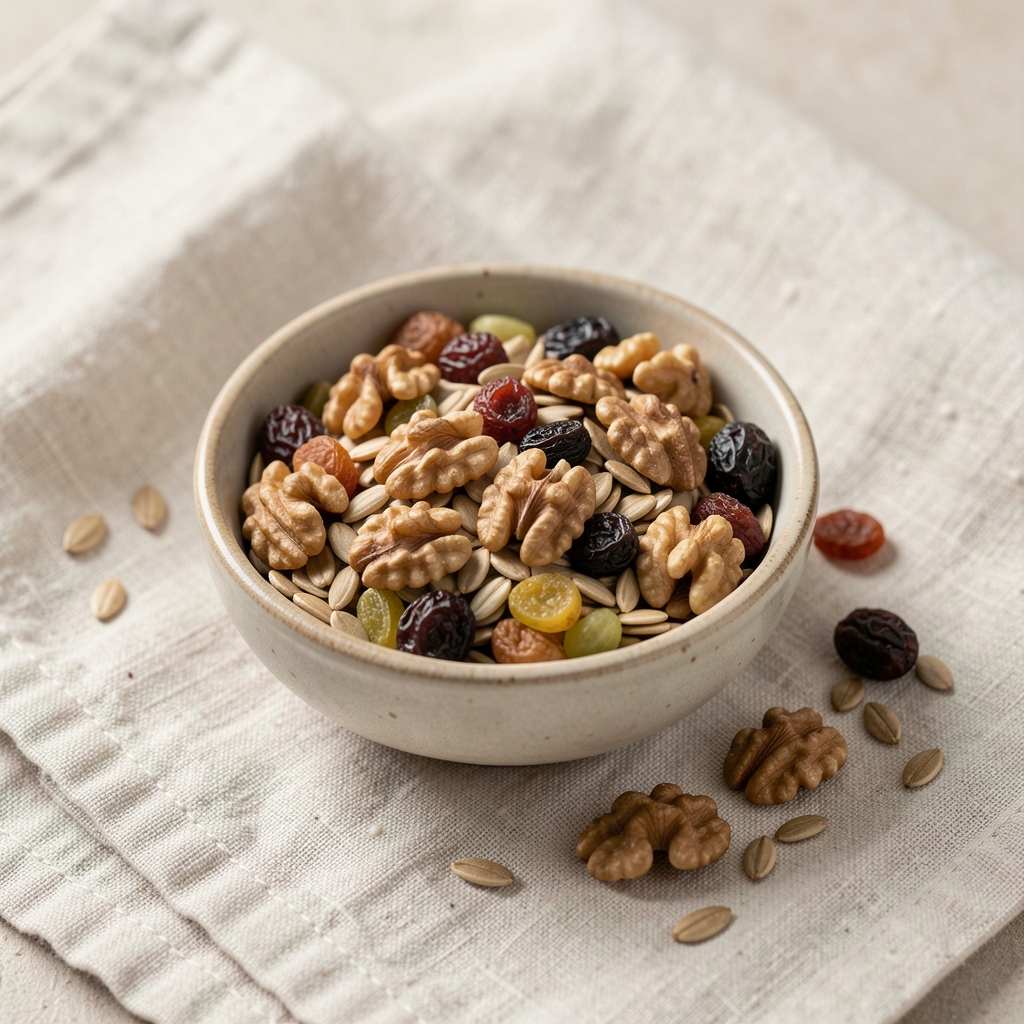
The practical implication for the working-week eating rhythm is relatively straightforward: increasing the proportion of whole-grain and legume-based foods at the first two meals of the day tends to reduce the frequency and urgency of the appetite signals that arrive between them. The exact relationship varies by individual, by food combinations, and by activity level — but the directional finding is consistent across a range of published dietary studies.
A Note on Portion Awareness and Eating Pace
Fibre's relationship to satiety is also mediated by the pace at which food is consumed. Eating slowly allows the gut-to-brain fullness signalling pathway — which operates on a roughly twenty-minute delay from the start of a meal — to register before the plate is empty. A high-fibre meal eaten quickly may still leave the eater feeling unsatisfied, because the body's satiety signals have not yet arrived by the time the eating has stopped.
This represents a useful framing for understanding portion awareness: it is not only about how much is on the plate, but about the duration over which it is consumed. A bowl of oats eaten over fifteen unhurried minutes in the morning may produce a qualitatively different satiety experience than the same bowl consumed in three minutes at a desk while reading a document. The food and hunger awareness dimension of eating pace is underrepresented in mainstream dietary discussion, which tends to focus on what is eaten rather than how and at what speed.
The compendium returns to this observation across several of its records. The relationship between fibre-rich foods, mindful eating pace, and sustained fullness is one of the more practically reproducible findings in everyday nutrition writing — accessible to ordinary working adults without specialised preparation, equipment, or expertise.
Bringing It Together: A Working Model
The evidence-informed picture of fibre and fullness across the working day can be summarised in broad strokes. Breakfast built around whole grains — oats, whole rye, barley — and supplemented with legumes, seeds, or protein-rich accompaniments tends to produce a slower return of hunger than a low-fibre equivalent. Lunch that includes cooked or raw vegetables in meaningful volume, alongside a whole-grain or legume base, extends the satiety period into the early afternoon. Snacking impulses, where they occur, are attenuated by the fibre density of the preceding meals.
None of this is proprietary knowledge. The relationship between dietary fibre and appetite is well-documented in the nutritional research literature and has been reported by food writers, nutritionists, and ordinary observers of eating patterns for decades. What the compendium attempts to add is the editorial lens: a considered, detailed record of how these relationships manifest in the context of a working week, in ordinary London kitchens and canteens, at real meal times.
The archive continues with records on protein sources and appetite, meal spacing, and the particular rhythms of vegetable-led eating across seasons. Each entry is reviewed before publication and cited where appropriate. The subject is appetite — observed closely, without guideline.